
















DUBAI, United Arab Emirates - The need to leverage AI and automation, best practices for balancing cost and customer experience, insights on crafting driver-centric logistics processes, and tips on building sustainable delivery models were some key discussion points at the virtual Logistics Tech Summit.
The first-ever mega virtual Logistics Tech Summit saw the participation of more than 500 supply chain executives from across the world, including the Middle East, India, Southeast Asia, and Europe, and multiple industry stalwarts as speakers from marquee organizations like Emirates Post, Jumia Group, Myntra, DTDC Express, Zepto, Meesho, Wellness Forever and more.
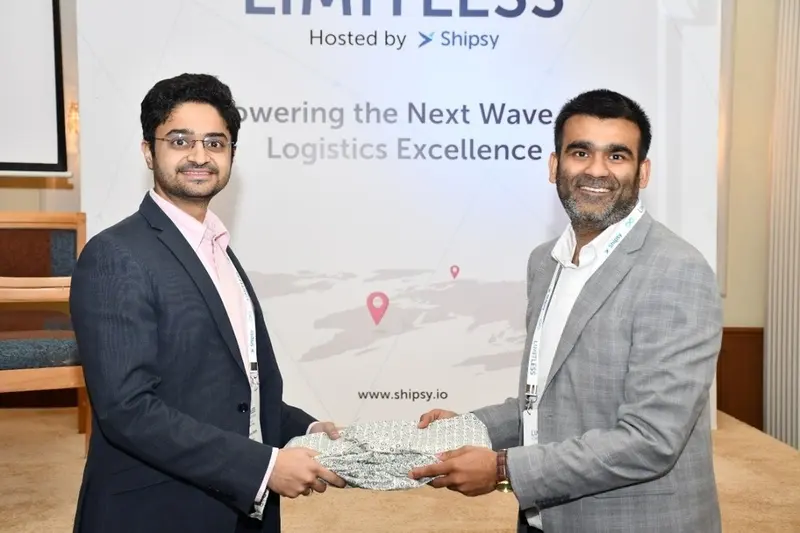
"Competition in the on-demand delivery market in the Middle East is escalating, and so is the race to become the delivery partner of choice. To stay ahead of the curve, businesses need to focus on using automation, AI, ML, predictive analytics, and more to build agile, resilient, and profitable delivery operations," said Soham Chokshi, Co-founder and CEO, Shipsy, while inaugurating the summit.
Transforming Logistics to Meet Growing Delivery Demands
Talking about the need for logistics transformation to address growing global delivery demands, Apoorva Kumar, Senior Vice President – Logistics Services, Jumia Group, highlighted the importance of "disaggregating" logistics operations to identify areas that can be optimized.
"We have been managing customer clearance using logistics partners. But recently, we started working with country-specific postal authorities to clear customs, and they are doing an incredible job. Once we started disaggregating our logistics operations, we realized that postal makes a lot of sense for us," said Kumar.
Deploying AI-Powered Tools To Address Inefficiencies
Inaccurate address is a critical challenge in the Middle East that advanced technologies can help address. A report highlights that Last-mile delivery failure rates range from 15% in the UAE to 40% in Saudi Arabia leading to poor customer satisfaction and lost revenue. This means that more than $7.42 billion in e-commerce revenue in the Middle East could be affected by inaccurate addresses.
"Businesses can buy off-the-shelf technologies that enable route optimization, help manage volume bounces easily, and get that extra 2-3% logistics efficiency while keeping customer experience intact," said Steve Stanton, Chief Business Officer – Parcels & Express, Emirates Post. He added that modern logistics management tools like "dynamic routing" can be used to crack the inaccurate address problem, a challenge that has the "biggest cost impact."
Leveraging the Power of Data Science
According to a recent report, data analytics is the top priority for 45% of global supply chain professionals. Businesses across the Middle East and South Asia are increasingly using data science to optimize logistics costs and boost competitiveness.
Abhishek Chakraborty, Executive Director – DTDC Express, highlighted the significance of "data science" when it comes to accurately understanding "where to establish hubs," "what kind of capacity to envision," and "what kind of trucks best suit a job." He highlighted that today 65-70% of decisions they take for their supply chain network and fleet are powered by data science. He also pointed out that even as the cost of operations gradually increases, data science has been enabling DTDC to stay highly competitive.
While talking about balancing cost and customer experience, Sourabh Pandey, CXO – Fulfilment & Experience, Meesho, highlighted the importance of bringing down the cost of logistics inefficiencies.
"Cutting down investments in customer experience to boost profitability is not a solution. Bringing down the cost of inefficiency is key. To achieve this, the industry needs to find ways to bring together customers and last-mile agents and create more actionable data in the ecosystem," said Pandey.
Building Driver Centric Logistics Strategy
Delivery executives play a critical role in shaping customer experience and ensuring delivery success. Hence it's imperative to ensure their well-being. Commenting on this vital aspect of modern logistics, Vikas Sharma, Senior Vice President – Operations, Zepto, said that to eliminate chances of riders hassling across the lengths and breaths of a city, they are building capabilities to assign them "dedicated service location."
"We provide insurance for our riders and their families. We have doctors on call for them in case of emergencies and have an efficient credit facility for them," Sharma added.
Scaling On Demand Deliveries
Ensuring scale and agility to meet fast delivery expectations is an area that many businesses in the Middle East are grappling with. Haarshal Thakker, Head – Omni Channel & Hyperlocal Business, Wellness Forever Medicare, spoke about how understanding the quick service restaurant model helped him scale.
"To enhance delivery agility, we have to set up dark stores closer to customers. We have taken inspiration from QSRs on how they manage to scale and keep their fixed costs low. They are generalists who taught us how to use LSPs to scale during peak hours efficiently," said Thakker.