
























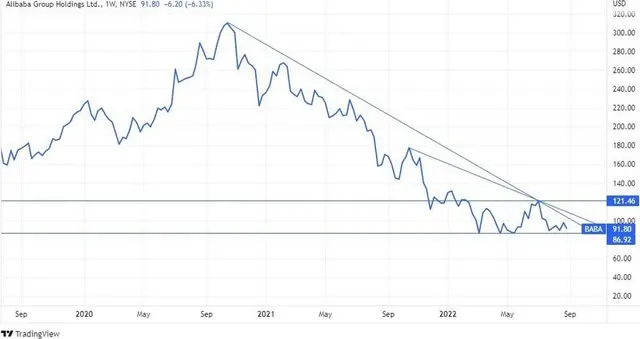
Dubai, United Arab of Emirates — The giant Alibaba is far more superior than most of us realize. At some point, Alibaba was the world’s 5th largest company after Google, Amazon, Apple & Microsoft. 2020 was the golden year, when its market capitalization hovered near $835 billion. That story is over, as Alpho broker summarizes in its analysis.
The coronavirus epidemic was the catalyst behind the rise of Alibaba. Consumers & businesses retreated to its globally-recognized & trusted e-commerce, retail, internet and technology services, amid lockdowns, shifting consumer behavior and supply chain uncertainties.
Snapped back to reality, Alibaba has suffered in 2021. The company lost half of its hard-earned value, then wounded by a further 25% cut in 2022, alongside the majority of all other stocks. Underwhelming quarterly performances pushed investors away from it, as domestic & global economic conditions were deteriorating. China’s “COVID Zero” restrictions, dwindling manufacturing activity and hot inflation have damaged the company’s growth prospects.
Recent Performance
In the quarter ended June 30, Alibaba’s figures were far from mediocre:
Revenue: $30.7 billion (-0.1% vs. 2021)
Net profit margin: 11% (-50% vs. 2021)
The multinational behemoth surpassed Wall Street projections, despite facing several headwinds from the turbulence of a windy year. COVID-19 resurgences in major Chinese cities led to lockdowns, which stagnated the economy. Strict regulations arising from Beijing’s technology crackdown, which lasted over a year-and-a-half, also limited Alibaba’s capabilities.
Fundamentals are solid, but adverse macroeconomic factors, including exacerbated oil supply shortages & record-high inflation across many regions, hammered the stock.
The stock lost ground the past two years, one underwhelming quarter after the other, but the negative trend is becoming less steep; a sign of recovery. A victim of conundrums & controversies, Alibaba should regain investor trust amid domestic regulatory strains, slowing economies and uncertain macroeconomic conditions.