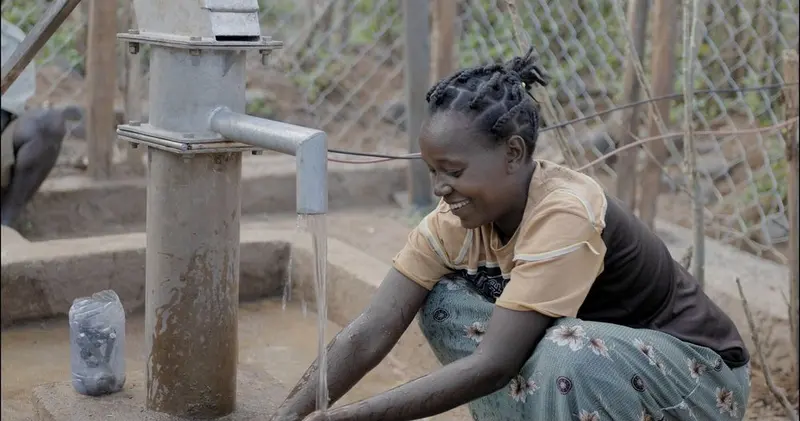
Abu Dhabi, United Arab of Emirates — Beyond2020, the UAE-driven humanitarian initiative launched by the Zayed Sustainability Prize and its partners, has improved access to safe drinking water for 9,000 people in the rural villages of Walessa, Holte, and Gato in Dirashe District, Ethiopia. Six shallow wells with solar pumps have been installed in the villages, reducing the incidence of waterborne diseases and improving overall health.
The Beyond2020 deployment in Ethiopia was implemented by the Zayed Sustainability Prize finalist Solarkiosk Solutions, a German based company that provides rural, off-grid communities electricity, benefitting five million people to-date.
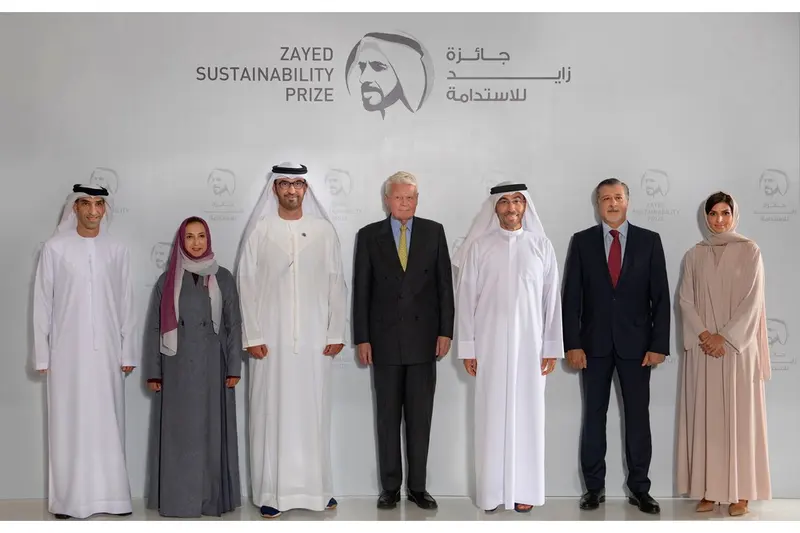
H.E. Dr. Sultan Ahmed Al Jaber, UAE Minister of Industry and Advanced Technology, Director General of the Zayed Sustainability Prize, and COP28 President-Designate, said: "As we continue to push towards a more sustainable and equitable world, access to safe water remains a fundamental human right. Beyond2020 and its partners are delighted to have been able to improve the livelihoods of three communities in Ethiopia by providing them with access to this essential resource. As the UAE prepares to host COP28 – a COP aimed at accelerating inclusive sustainable development, particularly in the Global South – this deployment in Ethiopia is a perfect example of how we can create meaningful change and address the urgent issues posed by climate change when we come together. We must continue acting in solidarity as we strive towards a future where safe water is accessible to all.”
The people of Dirashe District are primarily farmers who practice sustainable agriculture, a type of farming method that seeks to protect the environment and improve the productivity of agricultural systems. The villages of Walessa, Holte, and Gato are in the low land areas where drinking water is scarce. A growing population, rising demand for irrigation, and climate change – which is causing increasing levels of algae in the local rivers, making the water turbid and unsafe to drink – are increasing the pressure on the area’s limited water resources. Community members in all three villages were dependent on unsafe water sources, including surface water harvested from rain and nearby open rivers to meet their drinking, cleaning and cooking needs, which led to high rates of waterborne diseases.
To address the water shortage issue, several shallow hand-pump wells were drilled in the villages in 2014. Due to the mechanical operation of the hand pumps, however, the pumps were maintenance intensive, and the wells frequently became inoperable, leaving the community once again without any access to safe drinking water.
Now, those water wells have been retrofitted with solar pumps, with each well supplying 20,000-25,000 litres of clean drinking water every day, which is enough to meet the village’s drinking, sanitation, and agricultural needs.
H.E. Habtamu Itefa Geleta, Minister of the Ministry of Water and Energy of Ethiopia, said: “We would like to thank the Beyond2020 initiative, its partners, and the UAE government for supporting the efficient installation of a clean water source to improve the lives of thousands of people in these rural Ethiopian villages. Providing communities with their own local clean water source is key to improving health and wellbeing, as it reduces the risk of waterborne diseases, reduces the time and physical effort required to collect water, and supports good hygiene practices.”
The Beyond2020 deployment in the Dirashe District of Ethiopia has significantly reduced the burden of traveling long distances to fetch water – a burden which fell primarily on women and children, who spent several hours each day traveling as far as five kilometres to collect water from neighbouring water sources like open rivers and ponds during the dry seasons. This was a time-consuming and demanding task, which exposed the women and children to risks, including diseases and physical danger. Now, women and children can fetch water for their families in under ten minutes, allowing them time to pursue education, income-generating activities, and other productive activities.
Beyond2020 brings together a leading number of partners, which include Abu Dhabi Fund for Development, Mubadala Energy and Masdar.
As part of the Beyond2020’s impact to-date, a total of 15 deployments have been rolled out, including energy, health, water and food-related solutions in Nepal, Tanzania, Uganda, Jordan, Egypt, Cambodia, Madagascar, Indonesia, Bangladesh, the Philippines, Rwanda, Peru, Lebanon and Sudan. In addition to Ethiopia, another five countries have been identified as deployment grounds going forward.