
























State of Software Security Public Sector 2024 Report Confirms Public Sector Faces Higher Levels of Security Debt than the Private Sector
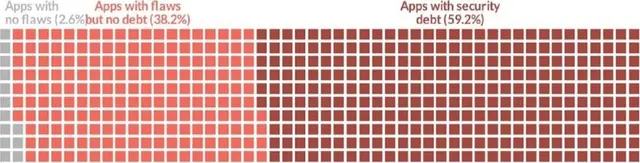
Veracode, a global leader in application risk management, today released research revealing applications developed by public sector organizations have more security debt than those created by the private sector. Security debt, defined for this report as flaws that remain unfixed for longer than a year, exists in 59 percent of applications in the public sector, compared to the overall rate of 42 percent. The research analyzed public sector organizations in more than 25 countries across the globe.
“Decades of accumulated security debt in unpatched software and poor security configurations, are in the applications that serve our government,” said Chris Eng, Chief Research Officer at Veracode. “Without a systematic and continuous approach to finding and fixing security flaws, the public sector is left dangerously exposed to attacks from hackers.”
Federal government systems are increasingly under cyberattack, as malicious criminals target public sector organizations with more damaging and disruptive techniques. In response, the federal government is enforcing a flurry of initiatives to strengthen cybersecurity, including efforts to reduce risk in the applications that serve the government. In March of 2024, the Cybersecurity and Infrastructure Security Agency (CISA) and the Office of Management and Budget (OMB) released the Secure Software Development Attestation Form to hold providers to the federal government accountable for insecure software.
Veracode researchers found that while slightly fewer public sector organizations (68 percent) have security debt than other industries (71 percent), they tend to accumulate more of it. Only three percent of applications are flaw-free, compared to six percent across other industries. Even more concerning, 40 percent of public sector entities have persistent, high-severity flaws that constitute ‘critical’ security debt, which would put the confidentiality, integrity, and availability of businesses at serious risk if exploited.
“The good news is that most organizations have the capacity to remediate all critical debt, but risk prioritization is key,” said Eng. “Two-thirds of all flaws in public sector organizations are either less than one year old or are not critical in severity. In addition, less than one percent of all flaws constitute critical security debt. By prioritizing that security debt with focused effort, organizations can achieve maximum risk reduction and then move to address non-critical flaws based on their risk tolerance and capabilities.”
According to the report, security debt in the public sector primarily affects first-party code (93 percent), but most of the critical security debt comes from third-party dependencies (55.5 percent). This reinforces the importance of the Open Source Security Software Initiative (OS3I), an inter-agency working group focused on ensuring open-source software is “as safe, secure and sustainable as it is open.” It also emphasizes the need for organizations to focus on both first- and third-party code to effectively reduce security debt.
The analysis further shows security debt in the public sector is primarily concentrated in older, larger applications (22 percent). This is especially true for critical security debt (30 percent), confirming a correlation between application age and the accumulation of security debt. Researchers also compared the security debt profile for different development languages and found that Java and .NET applications stand out as significant sources of debt in the public sector.
“The current state of software security in the public sector reinforces the importance of making secure by design a standard approach for the whole network connected world,” closed Eng. “We applaud CISA’s recent announcement of its Secure by Design Pledge and are proud to be one of the inaugural signatories. Our goal with this research is to further support our government and industry partners in promoting widespread adoption of these principles.”