

















The UAE Space Agency said on 2 November 2026 that its mission to the main asteroid belt remains on schedule for launch in the first quarter of 2028. Mohsen Al Awadhi, Director of the agency's Space Missions Department, gave the update to the Emirates News Agency (WAM) in Abu Dhabi.
According to the agency, the mission has moved into the assembly, integration and testing phase. The spacecraft completed its Critical Design Review in 2025 and its System Integration Review in September 2025. Teams are now integrating and testing the explorer's subsystems before the lander is added.
A lander made in the UAE
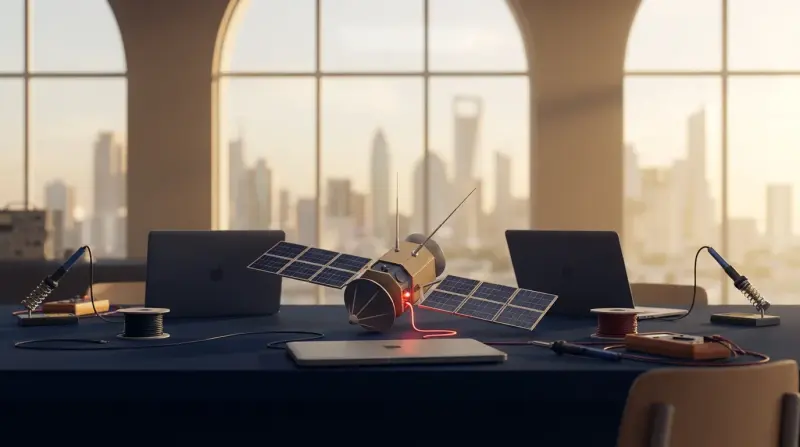
The EMA Lander was designed, developed, assembled and tested entirely in the UAE, with the Technology Innovation Institute playing a key role. It is being prepared for transfer to the Laboratory for Atmospheric and Space Physics at the University of Colorado Boulder, where it will be joined to the MBR Explorer for further testing. The finished spacecraft will then go through final reviews before being shipped to the launch site in Japan.
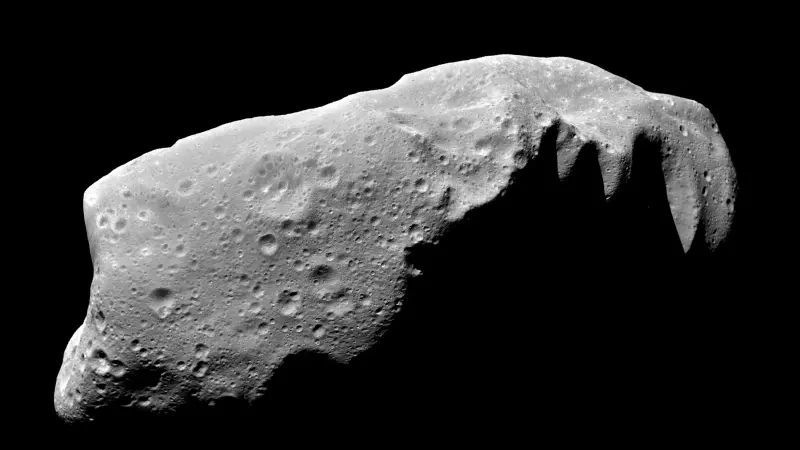
The lander will separate from the explorer at asteroid 269 Justitia, the seventh and final target, and approach its surface to take detailed images. The explorer is expected to study Justitia from orbit for about seven months first. Its first asteroid encounter, with 10253 Westerwald, is planned for February 2030.
Why it matters
The agency describes EMA as the most complex mission in the national space programme so far. About 150 Emirati professionals are working on it, and 50% of mission work has been allocated to private-sector companies. The explorer carries four main instruments, including a high-resolution camera and two infrared spectrometers, to study the minerals, surface and possible water content of water-rich asteroids.
National partners named by the agency include the Technology Innovation Institute, Khalifa University, New York University Abu Dhabi, the Mohammed bin Rashid Space Centre, the Sharjah Space and Astronomy Hub, HEX20 and UAE University's National Space Science and Technology Center. International partners include NASA, the Japan Aerospace Exploration Agency, the Italian Space Agency and Mitsubishi Heavy Industries. The agency says the launch window lasts only three weeks, which makes testing and planning critical.