The varied Peruvian geography includes an immense Amazon, imposing snow-capped mountains, and a long coastline where the desert extends. In the northern part of the country, thousands of years ago, between the dunes and the rich sea of the Pacific an enigmatic civilization arose: the Mochica culture.
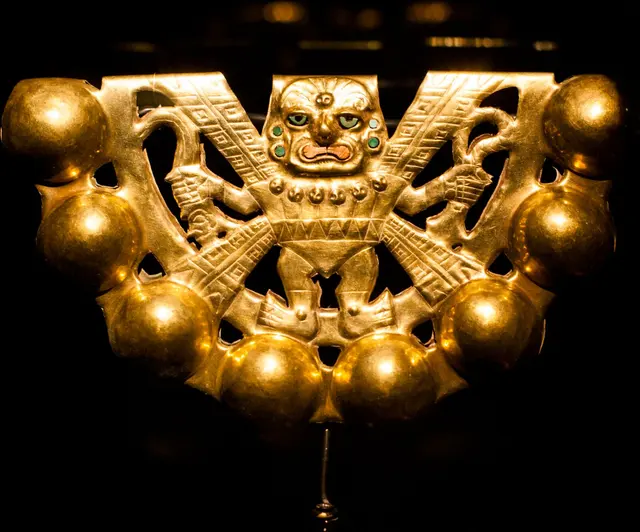
These masters of the desert were fierce warriors and stupendous engineers. They built canals to make the land fertile and raised adobe palaces, temples, and pyramids. The Mochica people also stood out for creating a large commercial network on the continent and for their wonderful ceramics. However, the most outstanding and surprising aspect of this culture was its exquisite goldwork.
The delicacy of the Mochica work with gold and other precious metals was highlighted by the surprising discovery of the tomb of the Lord of Sipán: just as the tomb of Tutankhamun allowed us to look closely at ancient Egypt, the discovery of the Lord of Sipán shocked the world for his abundant wealth and helped historians and archeologists to understand the importance of his reign. This discovery was considered one of the most famous archaeological finds of the twentieth century. The name Sipán comes from a site in a valley of the same name which was the central city for the Mochica people.
In the same way that the Mochica culture created an oasis in the middle of the Peruvian desert, the World Expo currently hosted by Dubai stands where there was only sand before. And just as part of Dubai's identity lies in its traditional gold market, this precious metal was also central to the Mochica society, especially their ruling class, the warrior caste.
In addition to ceramic and textile objects, more than two thousand pieces of gold and silver were found in the tomb. These ornaments and jewels of rank and power belonged to the Mochica ruler, the Lord of Sipán.