




The pilot will be part of Google and SRP’s effort to advance new non-lithium-ion long-duration energy storage technologies
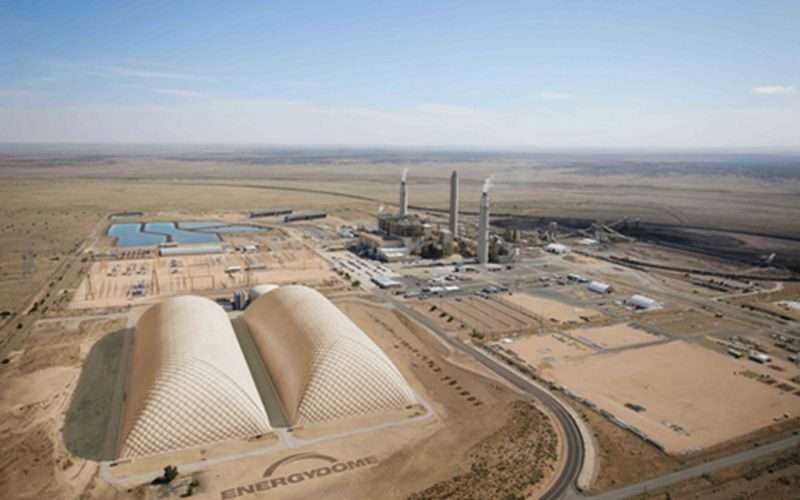
Energy Dome, a leading provider of innovative capacity solutions for utilities and AI infrastructure, and Salt River Project (SRP), a not-for-profit public power utility serving the greater Phoenix metropolitan area, today announced an agreement to add a 19 megawatt (MW), 10-hour carbon dioxide-based (CO2) battery system to the grid. The project is planned to be co-located on the site of SRP’s Coronado Generating Station (CGS) in St. Johns, Arizona, and it will be developed under a 20-year tolling agreement, with Energy Dome owning and operating the facility and SRP dispatching its output.
The project is also part of Google and SRP’s innovative collaboration to accelerate deployment of non-lithium-ion long-duration energy storage (LDES) technologies that support reliability, affordability, and sustainability. It will store enough energy to power approximately 4,275 homes for 10 hours. The project was selected through a Request for Proposals for LDES pilots issued by SRP in 2024. Google will fund a portion of the project through a cost-sharing agreement with SRP.
Claudio Spadacini, Founder and CEO of Energy Dome, said: “Arizona’s sustained growth makes it one of the most compelling energy markets in the country. At a time when AI growth and rising demand are reshaping America’s energy landscape, the CO2 Battery offers the scalable, dispatchable capacity needed to strengthen U.S. energy dominance. We are proud to support SRP with a solution that can be built quickly, manufactured domestically, and supported by our expanding U.S. capabilities, helping SRP increase energy security by harnessing locally produced Arizona power.”
The system will utilize Energy Dome’s CO2 Battery and proprietary thermomechanical long-duration energy storage process. The technology works by using power from the grid to compress and store CO2, then, when power is needed, expanding the CO2 through a turbine to generate energy to send back to the grid.
This project has accelerated Energy Dome’s investment in U.S. supply chain development that supports its broader mission to bring affordable, reliable energy to benefit U.S. energy customers and create American jobs.
“As energy demand continues to grow, SRP is evaluating new energy storage technologies that could support SRP’s effort to diversify its battery energy storage portfolio as we work to meet the Valley’s growing energy needs with affordable, reliable and sustainable power,” said Chico Hunter, SRP Manager of Innovation and Development. “This project will enable SRP to test the real-world performance of Energy Dome’s technology in the Arizona climate.”
SRP is working to at least double the number of generating resources on its power system by 2035 to meet increasing energy demand in the Phoenix metropolitan area. Energy storage is an important part of that effort.
“At Google, we are committed to catalyzing next-generation energy technologies to bolster grid resilience and introduce vital new capacity to the system,” said Lucia Tian, Director of Advanced Energy Technologies at Google. “This second project and important milestone in our collaboration with SRP builds on our long-term partnership with Energy Dome, and will help deliver dependable, cost-effective, and sustainable energy for Arizona’s ratepayers.”
The energy storage project is expected to come online in 2029. SRP and Energy Dome will work with EPRI, an independent, non-profit energy R&D institute, to monitor performance data from the project.